
SIGMA 85mm F1.2 DG Art (Ambassador)
A portrait lens tested by a landscape photographer, starting with the most unforgiving subject: the stars.
An 85mm F1.2 on a landscape photographer's desk
The SIGMA 85mm F1.2 DG Art did not arrive here for landscape work. This focal length is built for portraiture, weddings, fashion and every situation where the subject needs to stand apart from the rest of the frame. I normally think at 14mm and try to include as much of the world as possible, so the starting point was unusual.
SIGMA sent it to me for an unboxing, but stopping at the box would have made little sense. I took it to a wedding, mounted it on the 61-megapixel SIGMA fp L and pointed it at the sky. This is not a review after months of use. These are my first impressions after one week, using tests chosen to find out quickly where the lens holds up and where it does not.
Do we really need F1.2?
There is no huge light gap between F1.4 and F1.2. If shutter speed is the only measure, the advantage is real but it does not explain why a lens like this exists. The actual difference is how it separates the subject, how gradually the plane of focus dissolves and how much blur it can build around a face.
At weddings this becomes obvious immediately. Wide open, I can isolate a detail, an accessory or an expression without having to construct the background. I do not publish recognisable photographs of guests without permission, so I used everyday subjects here. The behaviour of the focus plane is still clear.

The test I run before trusting a lens: stars
A photograph of a bride can tell me a lot about autofocus and bokeh, but it often keeps the subject near the centre and leaves the edges out of focus. If I need to understand quickly whether a fast lens is properly aligned, I open the window and photograph stars wide open.
Point sources expose coma immediately. Near the corners they can stretch, split into crosses or look defocused. They also reveal decentring, because a misaligned sample tends to behave well on one side of the frame and worse on the other. It is a simple test, and far harsher than it looks.
My sample is already fully usable at F1.2. Residual coma is minimal and I saw no suspicious difference between sides. That is what surprised me most: I do not have to stop the lens down before it becomes serious. It is serious from the start.
Official SIGMA 85mm F1.2 DG Art page ↗
Construction and handling
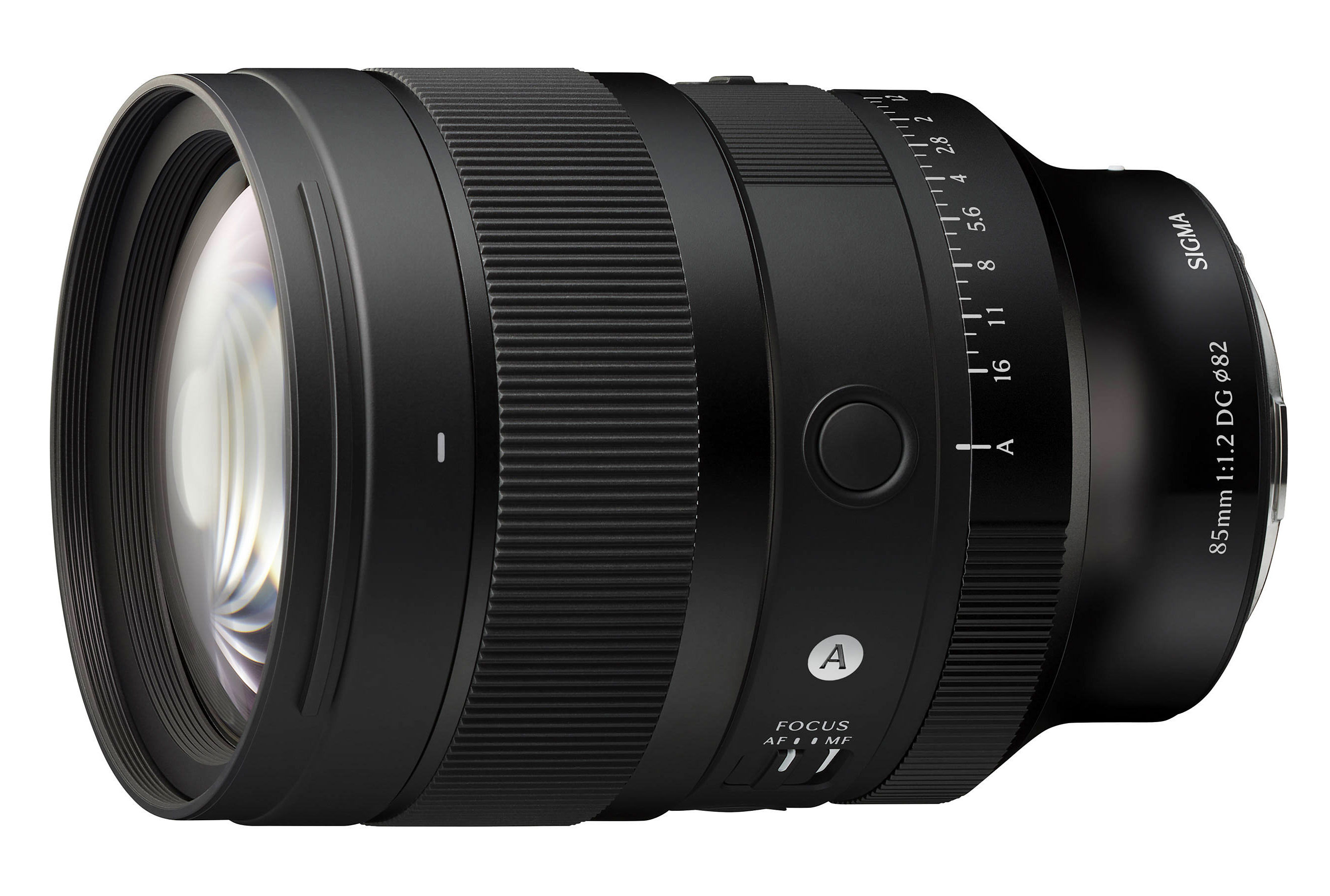
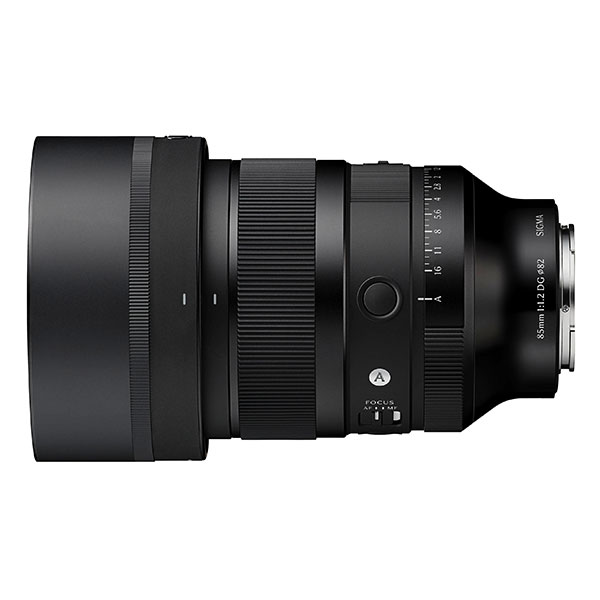
It is not small. It weighs 905 grams and takes 82mm filters. Even so, for a full-frame autofocus F1.2 it is more manageable than the specification might suggest. Two HLA motors move focus quickly and quietly, which matters more in the field than a list of acronyms.
The aperture ring is physical, can be de-clicked for video and has a lock to prevent accidental movement. There are two programmable AFL buttons. I am not the person to describe ten creative configurations for them. I work quite simply, and most of the time shutter speed, aperture and ISO are enough.
What I can say after one week
The lens resolves well on a 61-megapixel sensor, autofocus is fast enough for real work and wide-open performance does not feel like an emergency setting. My sample also passed a particularly demanding star test.
I cannot yet tell you how it behaves after a full wedding season or four months in the field. I would rather stop here than fill the page with photographs made only to increase the sample count. A long-term test still has to be earned.
Pros
- Convincing F1.2 performance on high-resolution sensors
- Very low coma and good sample uniformity
- Gradual transition from focus to blur
- Fast, quiet dual-HLA autofocus
- Complete physical controls and professional construction
Cons
- 905 grams remains a lot over a full day
- F1.2 depth of field demands accuracy
- These are first impressions, not a long-term review
Who it makes sense for
This is not the lens I would choose first for a landscape day, and pretending otherwise would be odd. For portraiture, weddings and people-centred reportage, it combines genuinely usable F1.2 rendering with autofocus that does not slow the work down.
The point I take from this first week is simple. A lens like this should not be judged only by the extra light over F1.4. It should be judged by how it draws the subject, and first checked where very fast lenses usually begin to fail. That is exactly where my test started.