
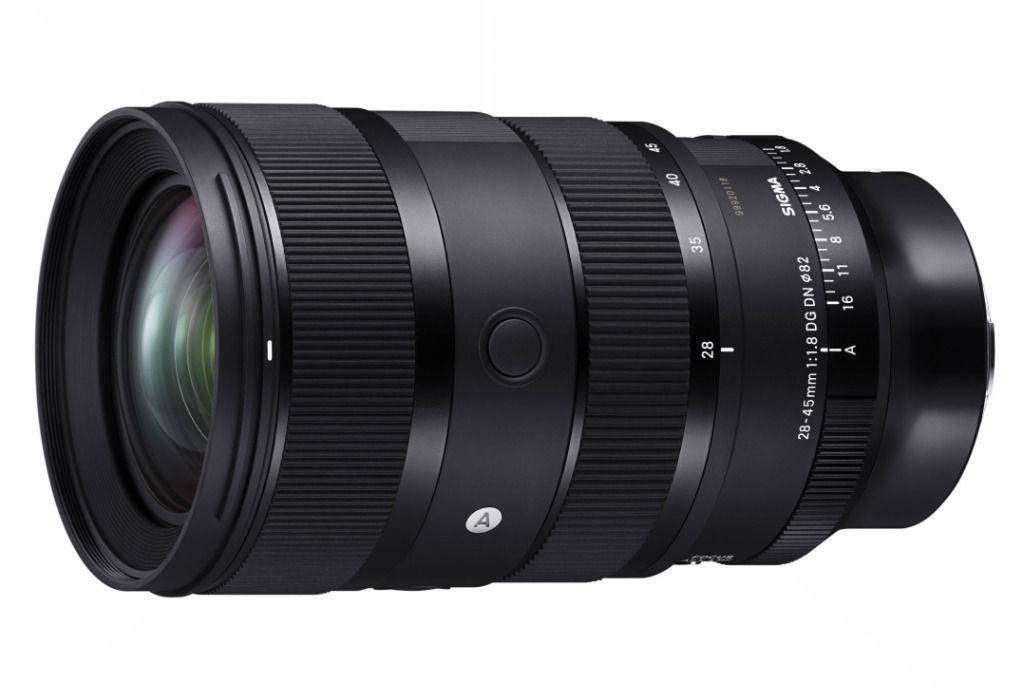
SIGMA 28-45mm F1.8 DG DN Art
A zoom that behaves like three prime lenses
When SIGMA introduced the SIGMA 28-45mm F1.8 DG DN Art, the world's first zoom for full-frame sensors with a constant F1.8 aperture, the reaction of many was one of pure curiosity mixed with skepticism: does a zoom with such a short focal length range make sense?
The answer becomes clear the moment you stop thinking of it as a normal zoom and start looking at it for what it really is: a set of three elite prime lenses (28mm, 35mm and 45mm F1.8) housed in the same barrel.
At full aperture F1.8, the separation of the planes and the ability to gather light have nothing to envy of the best dedicated prime lenses of the Art series. I put this lens to the test in two completely opposite but equally demanding contexts: wedding photography and landscape astrophotography. And it was under the night sky that the magic happened.
The mechanics of internal zoom: from video to star tracker
One of the most refined engineering choices of this lens is the system of zoom interno (Internal Zoom): By rotating the ring from 28 to 45mm, the physical length of the lens does not change by a single millimeter and the front lens does not move.
In the world of video and gimbals, this is the fundamental requirement to avoid having to recalibrate the stabilization motors with every focal length change. But there's a second fundamental consequence, which is rarely talked about and which was a revelation for me: on the star tracker the center of gravity remains absolutely still.
Anyone who does astrophotography knows how delicate it is to balance the counterweights of an equatorial head or a portable star tracker in the dark, in the wind, and at subzero temperatures. With the 28-45mm F1.8 I can calibrate the tracking at 28mm and then tighten it to 35mm or 45mm to isolate constellations or portions of the Milky Way without touching the mechanical setup at all.
📊 Table: Key Focal Lengths & Dual-Use Performance
| Focale | Field Angle | Surrender in the Wedding | Resa in Astrophotography |
|---|---|---|---|
| 28 mm | 75.4° | General views, dances and tables with clear separation of the subjects | Ambient astrophotography, galactic arc and mountain landscape |
| 35 mm | 63.4° | The ultimate reportage focal length: natural and three-dimensional | Balanced shot of star clusters and Alpine peaks |
| 45 mm | 51.4° | Half-length portraits with buttery blur and enhanced skin tone | Close-up details of the Milky Way's nucleus and emission nebulae |
In the wedding: the return to conscious movement
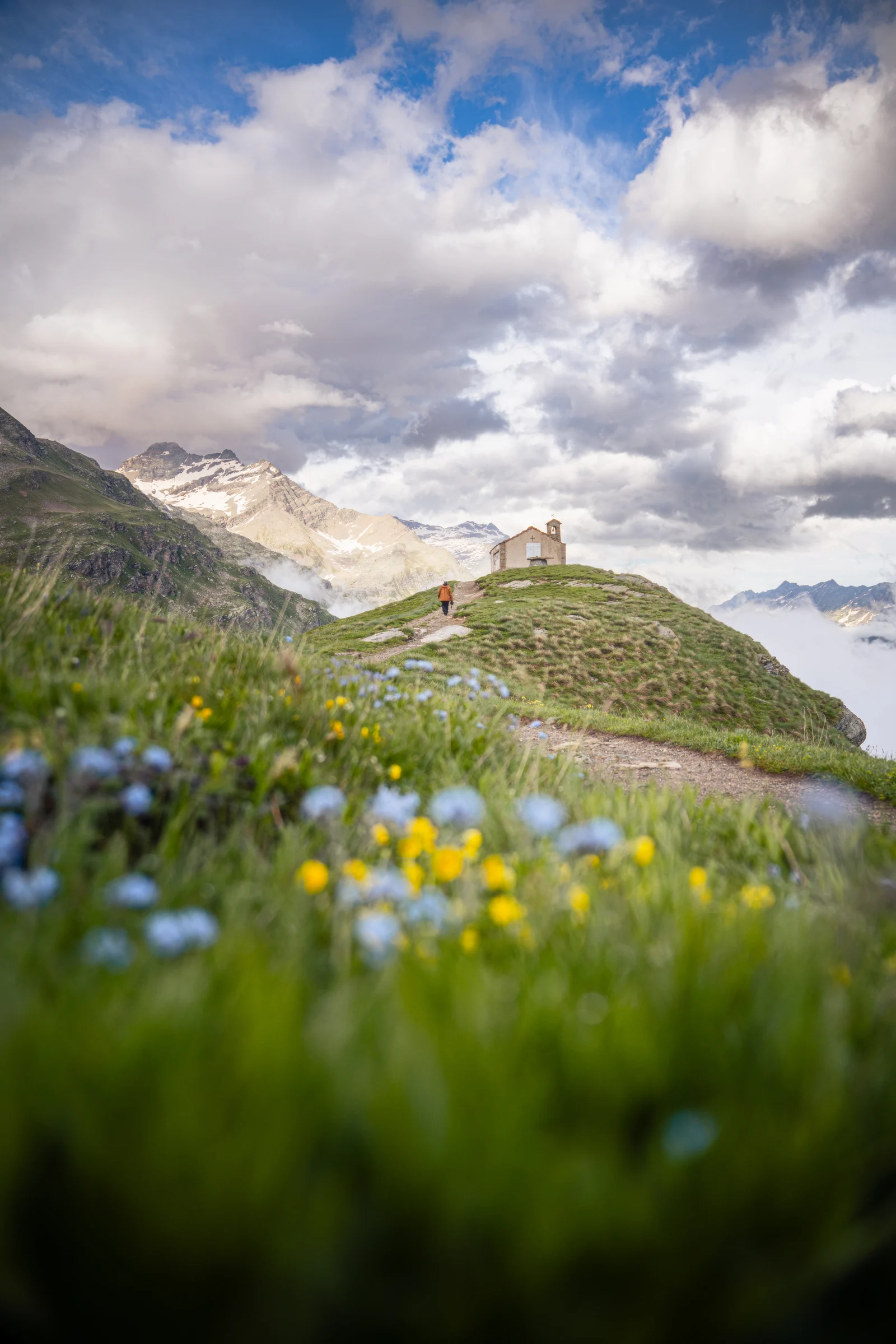
I have used the SIGMA 28-45mm F1.8 on several wedding services. From a quality point of view, the rendering is sublime: delicate contrast, plasticity of the figures and impeccable color rendition of skin tones.
What changes radically is the way you shoot. With such a short range, you don't behave like with a classic reportage zoom: you don't rely lazily on the ring, but take a step forward or a step back. It's the same discipline and pace you adopt when working with fixed lenses, but with the irreplaceable convenience of having three prime focal lengths in the same camera body.

Astrophotography: coma rendering at F1.8 throughout the range
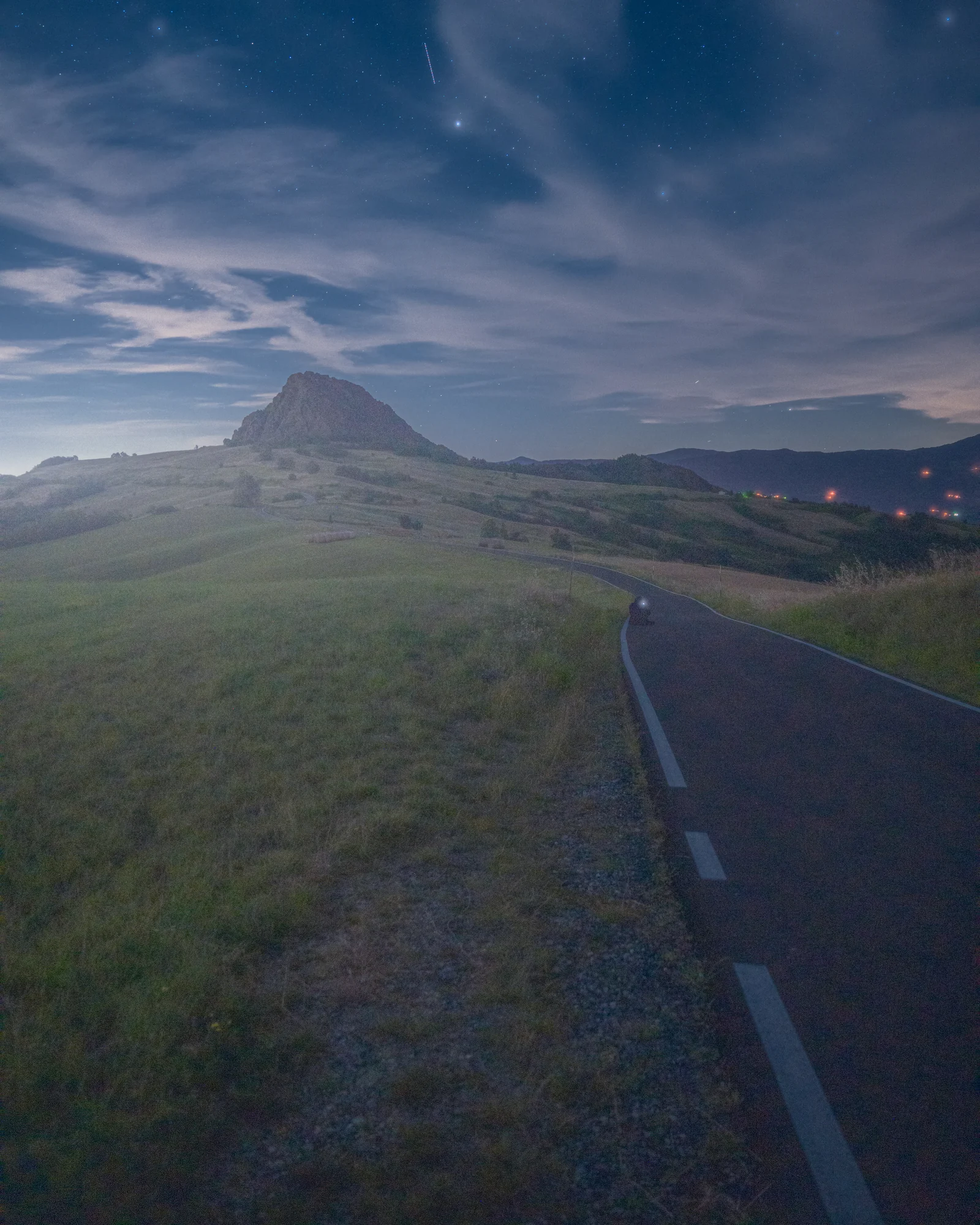
For landscape astrophotography, shooting at f/1.8 gives roughly 1.27 stops more light than f/2.8. In practice, that margin can shorten the exposure or lower the ISO, although the real benefit depends on the scene and star movement.
But the real surprise lies in the sagittal coma and chromatic aberration control at full aperture. Already at F1.8, both at 28mm and at 35mm and 45mm, the stars maintain an impressive pinpoint sharpness even when approaching the edges of the frame. There is no trace of that unpleasant 'gull-wing' distortion typical of many zoom lenses opened to the maximum.
Being able to compose the sky by varying from 28 to 45mm with the security of a premium fixed lens optical performance at F1.8 gives you a creative freedom that no other lens on the market is able to offer.
Weight, size and system logic
With its 960 grams and a filter diameter of 82mm, the 28-45mm F1.8 is an imposing lens. But even here the opinion changes radically if you evaluate the sistema instead of the single object.
In my night astrophotography sessions I almost always move with l'auto in appoggio close to observation points, so the weight on your shoulders for long walks is not an obstacle. Furthermore, carrying a single 28-45mm F1.8 avoids having to carry three separate prime lenses (a 28mm F1.8, a 35mm F1.4 and a 50mm F1.8), eliminating the overall weight of multiple bodies and avoiding the risk of changing lenses in the dark due to dust, frost and condensation.
✅ PRO
- Apertura massima F1.8 costante: unprecedented brightness and sharpness of the planes for a zoom
- Extraordinary Coma Control at full aperture throughout the focal length
- Zoom interno (Internal Zoom): perfect balance on gimbal and star tracker
- Sostituisce tre ottiche fisse reducing lens changes in the dark or during events
- Absolute level sharpness and micro-contrast da centro a bordo
❌ CONTRO
- Escursione focale ridotta which requires a targeted compositional approach
- Important weight and dimensions (960g) not ideal for lightweight hiking
Conclusioni
When I first picked up the SIGMA 28-45mm F1.8 DG DN Art, I thought it was an experimental lens, intended for a narrow niche of demanding videographers or wedding photographers.
After using it in the field, and especially after seeing the night files produced at F1.8 on an equatorial mount, I can say this without hesitation: has entered my astro kit with all her might and is here to stay..
If you want to experience its performance firsthand and understand how a constant F1.8 can change the way you capture the night or events, I'll be waiting for you in the field during my next workshops!